
Choosing the right vacuum excavator depends on the type of work you do, the locations you operate in and the level of capacity and mobility you need. Two common options are trailer-mounted and truck-mounted vacuum excavators.
Both are designed for non-destructive digging (NDD), using powerful vacuum systems to remove soil, water and other materials. However, each has different advantages depending on your project requirements.
In this guide, we’ll compare trailer-mounted and truck-mounted vacuum excavators to help you decide which option is right for your business.
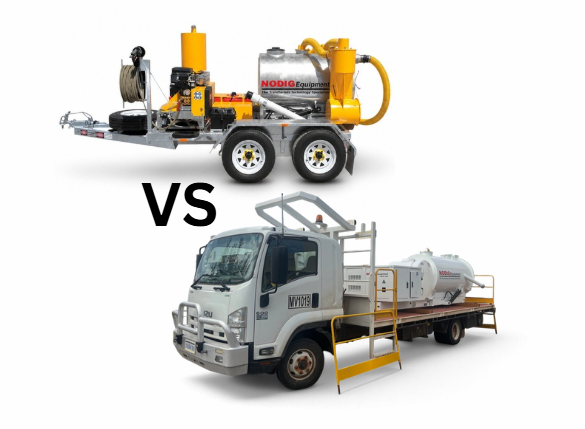
A trailer-mounted vacuum excavator is a self-contained vacuum excavation unit built onto a towable trailer. It can be transported behind a suitable vehicle and disconnected when it reaches the worksite.
Trailer-mounted units are commonly used for utility locating, potholing, service exposure, civil construction and general excavation work.
Key benefits of trailer-mounted vacuum excavators:
Flexible transport: Can be towed by a suitable work vehicle, allowing the towing vehicle to be used for other tasks.
Versatility: Suitable for a range of construction, civil and utility applications.
Easy positioning: Can be disconnected and positioned independently of the towing vehicle.
Practical for smaller crews: Provides a dedicated excavation unit without requiring a specialised truck.
Range of sizes: Available in different capacities to suit different workloads and site requirements.
Trailer-mounted machines are a practical option for contractors who want flexibility across multiple jobsites without committing to a dedicated vacuum excavation truck.
A truck-mounted vacuum excavator is installed directly onto a truck chassis, combining the vacuum excavation system and transport vehicle into one machine.
These units are often used for larger civil construction projects, utility maintenance, infrastructure works and jobs requiring frequent movement between locations.
Key benefits of truck-mounted vacuum excavators:
All-in-one setup: The excavation equipment and transport vehicle are combined.
Convenient mobility: The machine can travel directly between jobsites without requiring a separate towing vehicle.
Larger capacity options: Some truck-mounted configurations offer larger spoil tank capacities and higher-volume systems.
Dedicated operation: Designed for businesses that regularly undertake vacuum excavation work.
Truck-mounted vacuum excavators can be particularly useful for businesses carrying out larger or frequent excavation projects where having the equipment and vehicle together is beneficial.
While both options perform the same general function, there are several differences worth considering before purchasing.
| Feature | Trailer-Mounted | Truck-Mounted |
|---|---|---|
| Transport | Requires a suitable towing vehicle | Integrated into truck |
| Flexibility | Trailer can be disconnected | Vehicle and equipment stay together |
| Vehicle use | Towing vehicle can be used separately | Dedicated truck required |
| Positioning | Can be separated from towing vehicle | Remains attached to truck |
| Capacity | Varies depending on model | Varies depending on truck configuration |
| Best suited for | Flexible, multi-purpose operations | Frequent and larger-scale operations |
The right choice will depend on your business, the type of excavation work you undertake and how frequently you need to move between jobsites.
When deciding between a trailer-mounted and truck-mounted vacuum excavator, consider the following factors.
1. Type of work
Think about the projects you regularly undertake. For potholing, utility exposure and general civil construction, a trailer-mounted unit may provide all the capability you need. Larger infrastructure projects and frequent excavation work may benefit from a truck-mounted setup.
2. Transport requirements
Consider what vehicles your business already operates. If you have a suitable towing vehicle, a trailer-mounted vacuum excavator can be a practical option. If you prefer an integrated transport and excavation setup, a truck-mounted unit may be more suitable.
3. Capacity and performance
Vacuum excavators are available in different configurations, with varying tank capacities, vacuum performance and water systems. Consider the volume of material you need to remove and the conditions you typically work in rather than choosing a machine based on size alone.
4. Budget and operating costs
The initial purchase price is only one part of the decision. Consider ongoing maintenance, registration, fuel consumption, servicing and the additional vehicle requirements associated with each setup.
5. Future business requirements
Think about where you want your business to be in the next few years. Choosing equipment that can accommodate your expected workload can help avoid outgrowing your investment too quickly.
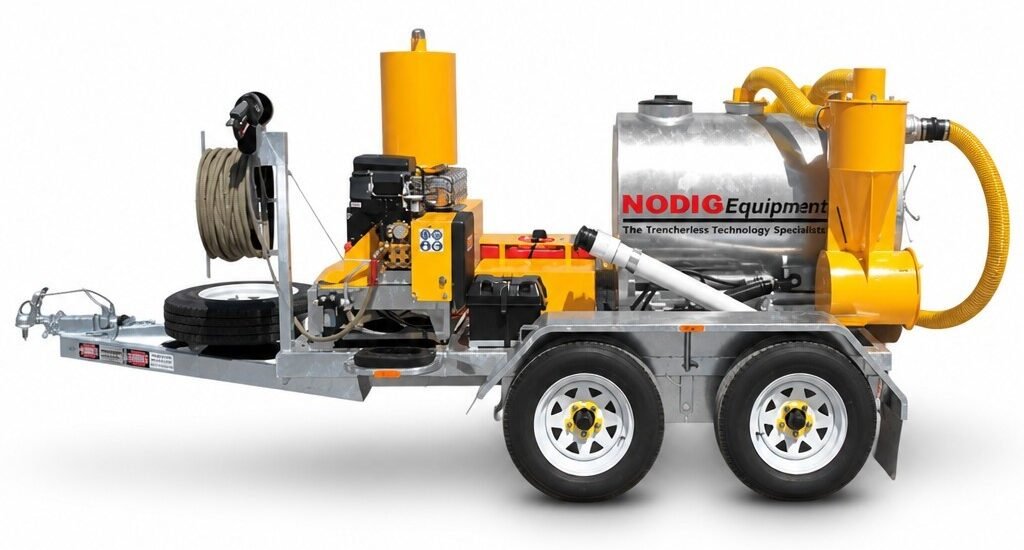
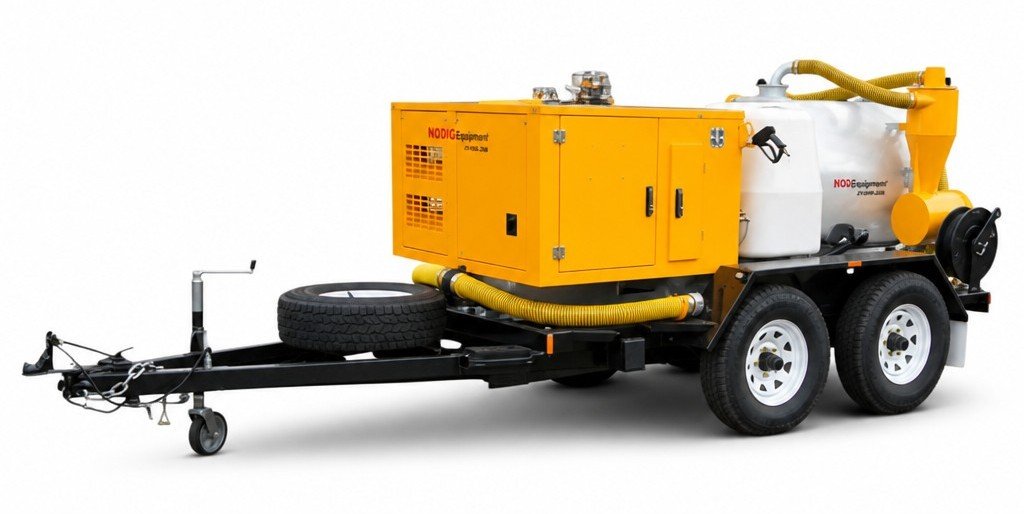
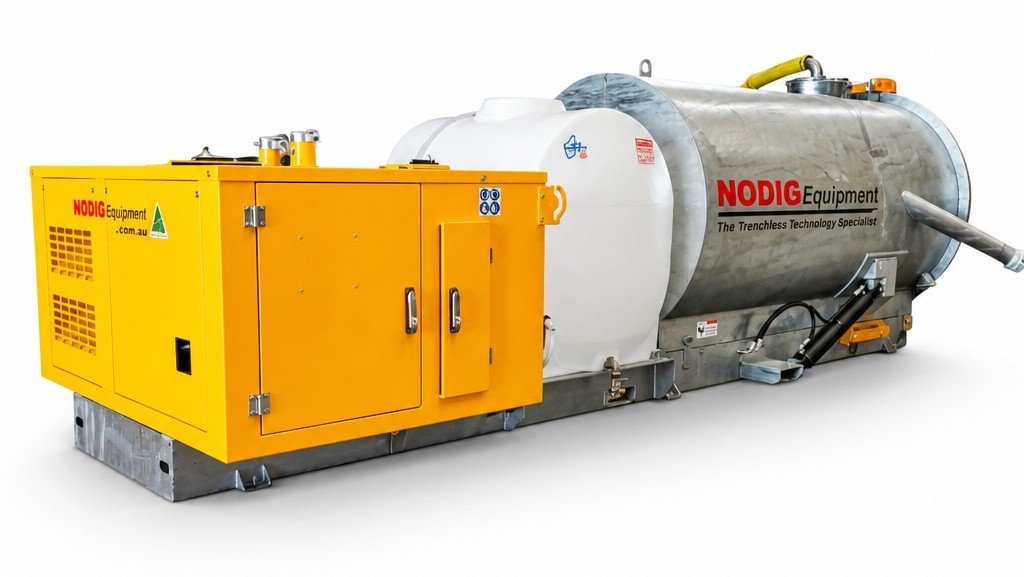
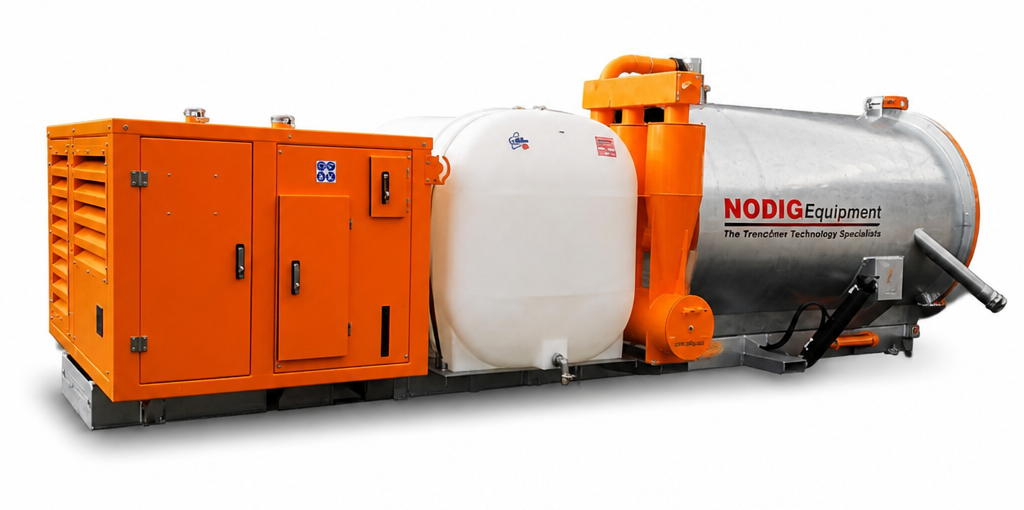
At No Dig Equipment, we supply a range of trailer-mounted vacuum excavators designed for different excavation requirements.
Our range includes the VM400, VM850D, VM2000, VM3000 and VM4000, offering different capacities and configurations to suit a variety of applications.
Whether you’re looking for a compact unit for smaller jobs or a higher-capacity machine for demanding excavation work, choosing the right equipment starts with understanding your operational requirements.
Not sure which machine is right for you?
Get in touch with the No Dig Equipment team. We’re happy to help you compare options and find a vacuum excavator suited to your work.
Not necessarily. Vacuum performance depends on the specifications of the individual machine, including its vacuum system, airflow and configuration. A trailer-mounted unit can offer substantial excavation capability, depending on the model.
You need a suitable towing vehicle that meets the trailer’s ATM, towing capacity and applicable towing requirements. Always check the specifications of the particular unit and vehicle before towing.
Maintenance requirements depend on the equipment and its components rather than simply whether it is trailer or truck-mounted. Both types require regular servicing of their vacuum systems, pumps, filters and other components.
This depends on the type of work, required spoil capacity, excavation conditions and how frequently you operate the machine. Consider your typical workload and speak with an equipment supplier before making a decision.
Yes. Trailer-mounted vacuum excavators are used across civil construction, utility installation, landscaping and infrastructure projects. The important thing is selecting a machine with the appropriate capacity and performance for the work.
We can talk you through the different models, explain their capabilities and help you find a machine that suits your work requirements.